Elevating Digital Wardrobes: The Strategic Value of Cardigan and Shirts Flat Icons in Modern Web Design
In the rapidly evolving landscape of digital commerce and user experience design, visual communication has transcended mere decoration to become a fundamental pillar of functionality. As brands strive to create intuitive, engaging, and aesthetically pleasing interfaces, the demand for high-quality, semantically rich graphic assets has never been higher. Among these assets, the Cardigan and Shirts Flat Icon stands out as a critical element for platforms operating within the apparel, fashion, and lifestyle sectors. This specific vector illustration is not just a static image; it is a versatile symbol that bridges the gap between abstract navigation concepts and tangible consumer products.
Understanding the role of such icons requires looking beyond their pixel dimensions. It involves recognizing how Cardigan and shirts flat icon. Apparel, outerwear, clothes isolated vector assets contribute to a cohesive brand identity, streamline user workflows, and align with broader trends in minimalism and mobile-first design. For professionals, creators, entrepreneurs, and marketers, mastering the application of these visual elements is essential for building digital experiences that resonate with modern audiences.
The Anatomy of Effective Apparel Iconography
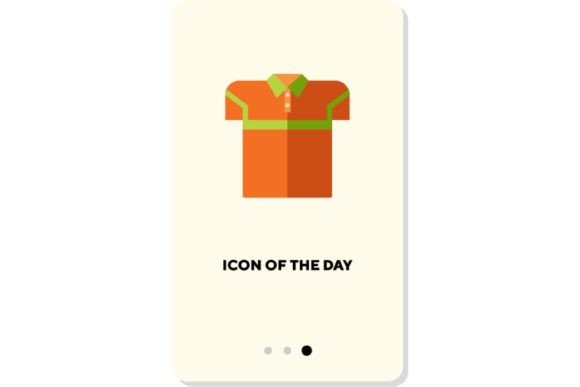
At its core, a flat icon is a simplified, two-dimensional representation of an object, stripped of unnecessary details like gradients, shadows, or textures. When applied to fashion items such as cardigans and shirts, this style offers clarity and immediate recognition. The Cardigan and Shirts Flat Icon typically features clean lines, solid colors, and a distinct silhouette that allows users to identify the category instantly, even at small sizes.
The term "isolated vector" is crucial here. It signifies that the graphic is created using mathematical paths rather than pixels, allowing it to be scaled infinitely without losing quality. This scalability is vital for responsive web design, where an icon might appear as a tiny breadcrumb on a mobile device and as a large hero graphic on a desktop landing page. By utilizing a Vector illustration symbol elements for web design, developers ensure consistency across all breakpoints, maintaining the integrity of the visual language regardless of the screen size.
Furthermore, the combination of a cardigan and a shirt in a single icon often represents a broader category, such as "tops," "outerwear," or "casual wear." This semantic grouping helps reduce cognitive load for users. Instead of navigating through multiple sub-menus, a shopper can click on a single, well-designed icon to access a curated collection of relevant items. This efficiency is a cornerstone of modern e-commerce usability.
Aligning with Minimalist Design Trends
The popularity of flat design icons is deeply rooted in the broader aesthetic shift towards minimalism in digital interfaces. Over the past decade, users have grown accustomed to clean, uncluttered layouts that prioritize content and functionality over ornamental excess. This trend is driven by the need for faster load times, better accessibility, and improved readability on smaller screens.
In this context, the Cardigan and Shirts Flat Icon serves as a perfect example of form following function. Its simplicity ensures that it does not compete with other elements on the page, such as product photography or call-to-action buttons. Instead, it acts as a subtle guide, directing the user’s eye and facilitating navigation without causing visual fatigue. For marketers and designers, this means that incorporating such icons is not just a stylistic choice but a strategic decision to enhance user engagement and retention.
Moreover, flat icons are highly adaptable to various brand identities. By adjusting the color palette, line weight, or slight stylistic nuances, a standard Cardigan and shirts flat icon. Apparel, outerwear, clothes isolated vector can be customized to match the tone of a luxury boutique, a sustainable fashion brand, or a fast-paced retail giant. This flexibility makes them an invaluable asset for businesses looking to maintain a consistent visual identity across diverse touchpoints.
Enhancing User Experience in E-Commerce
The primary goal of any e-commerce platform is to convert visitors into customers. Every element of the user interface plays a role in this conversion funnel, and icons are no exception. A well-designed icon can significantly improve the discoverability of products, reduce bounce rates, and increase the time spent on site.
Consider the typical journey of a online shopper. They land on the homepage and are presented with a grid of categories. If the icons representing these categories are ambiguous or poorly designed, the user may become frustrated and leave. However, if they encounter a clear, recognizable Cardigan and Shirts Flat Icon, they can quickly navigate to the section that interests them. This seamless interaction builds trust and encourages further exploration.
Additionally, icons play a crucial role in mobile commerce, where screen real estate is limited. On a smartphone, text labels often take up valuable space and can clutter the interface. Replacing text with intuitive icons, such as a shirt and cardigan symbol for the "Clothing" category, allows for a cleaner, more spacious layout. This approach aligns with the expectations of modern consumers who prioritize speed and ease of use on mobile devices.
- Improved Navigation: Icons act as visual signposts, helping users find what they need quickly.
- Faster Load Times: Vector icons are lightweight files that do not slow down page performance.
- Cross-Platform Consistency: Scalable vectors look sharp on any device, from smartwatches to 4K monitors.
- Universal Understanding: Simple symbols transcend language barriers, making sites more accessible to global audiences.
The Business Case for High-Quality Vector Assets
For entrepreneurs and business owners, investing in high-quality vector assets like the Cardigan and Shirts Flat Icon is a cost-effective strategy with long-term benefits. Unlike raster images, which require multiple versions for different resolutions, a single vector file can be used everywhere. This reduces the workload for design teams and ensures that branding remains consistent across all marketing channels, from social media ads to email newsletters.
Furthermore, the use of professional-grade icons signals attention to detail and a commitment to quality. In a competitive market, these small touches can differentiate a brand from its competitors. Consumers are increasingly savvy and can distinguish between amateurish designs and polished, professional interfaces. By utilizing Vector illustration symbol elements for web design, businesses convey a message of reliability and sophistication.
From a technical perspective, vector icons are also easier to animate. Modern web design often incorporates micro-interactions—small animations that provide feedback to user actions. A flat icon of a cardigan and shirt can subtly change color, scale, or rotate when hovered over or clicked, adding a layer of interactivity that enhances the overall user experience. These dynamic elements make the interface feel alive and responsive, fostering a deeper connection between the user and the brand.
Integrating Icons into Content Strategy
Beyond navigation, icons can be powerful tools in content marketing. Blog posts, lookbooks, and style guides can benefit from the inclusion of relevant graphics to break up text and illustrate key points. For instance, an article about layering techniques could feature a Cardigan and Shirts Flat Icon to visually represent the concept of combining different garments. This not only makes the content more engaging but also improves readability and retention.
Moreover, icons can be used to highlight specific features or values of a brand. A sustainable fashion label might use a specific set of icons to denote eco-friendly materials, ethical manufacturing, or recyclable packaging. In this way, the Cardigan and shirts flat icon. Apparel, outerwear, clothes isolated vector becomes part of a larger visual narrative that communicates the brand’s mission and values to its audience.
- Identify Key Categories: Determine which product groups are most important to your audience.
- Select Consistent Styles: Ensure all icons share the same line weight, color scheme, and level of detail.
- Optimize for Performance: Use SVG formats to keep file sizes small and loading times fast.
- Test for Accessibility: Ensure icons have sufficient contrast and include alt text for screen readers.
- Iterate Based on Feedback: Monitor user behavior and adjust icon usage to improve clarity and engagement.
Future-Proofing Your Visual Identity
As technology continues to advance, the ways in which we interact with digital interfaces will evolve. Voice search, augmented reality, and artificial intelligence are reshaping the e-commerce landscape. However, the fundamental need for clear, concise visual communication will remain. Icons serve as a universal language that can adapt to new technologies and platforms.
For instance, in an augmented reality shopping experience, users might scan a physical item to see related products online. A recognizable Cardigan and Shirts Flat Icon could appear in the AR interface, linking the physical world to the digital catalog. Similarly, in voice-activated shopping, visual confirmations on smart displays will rely on simple, easily interpretable graphics to verify user commands.
By investing in versatile, high-quality vector assets now, businesses can future-proof their visual identity. These assets are not tied to a specific trend or technology but are foundational elements of digital design that will continue to be relevant for years to come. Whether you are a freelancer building a portfolio, a marketer launching a new campaign, or an entrepreneur scaling a startup, understanding the power of icons like the Cardigan and Shirts Flat Icon is essential for success in the digital age.
In conclusion, the integration of Cardigan and shirts flat icon. Apparel, outerwear, clothes isolated vector elements into web design is more than a aesthetic choice; it is a strategic imperative. These icons enhance usability, support brand consistency, and align with contemporary design trends. By leveraging these tools effectively, professionals and businesses can create digital experiences that are not only visually appealing but also highly functional and user-centric. As the digital landscape continues to evolve, the importance of clear, scalable, and meaningful visual symbols will only grow, making them an indispensable part of any modern design toolkit.